Robert Höglund on carbon removal: "If everyone waits until 2030, the capacity won't be there."
In 2021, Robert Höglund, Climate Lead at Milkywire, helped build up the Climate Transformation Fund. The fund, which today is supported by Klarna, Spotify, and around twenty other companies, helped contribute to some of the world's first catalytic purchases — that is, purchases that make a real difference — of carbon dioxide removal (CDR).
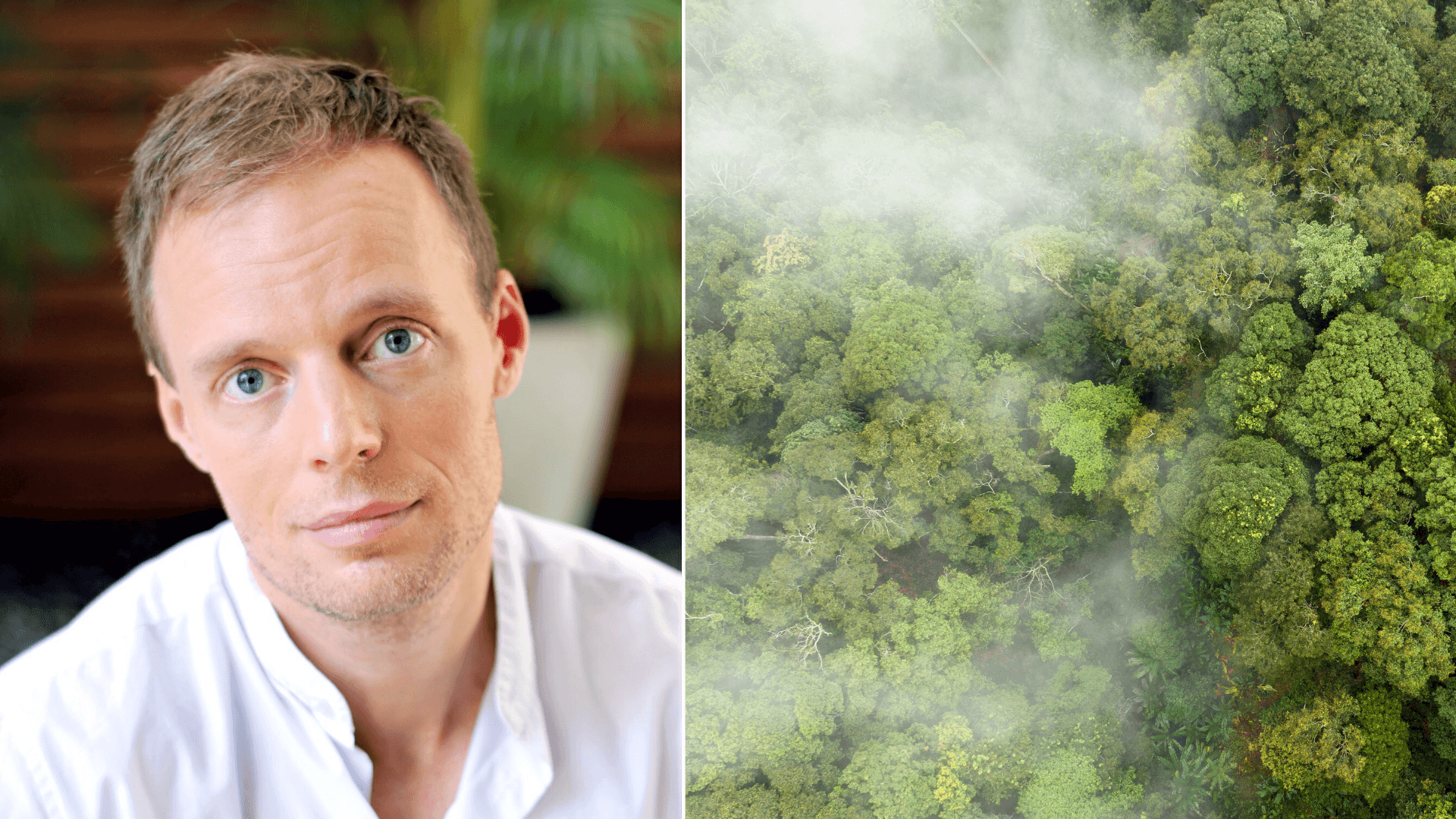
In 2021, Robert Höglund, Climate Lead at Milkywire, helped build up the Climate Transformation Fund. The fund, which today is supported by Klarna, Spotify, and around twenty other companies, helped contribute to some of the world's first catalytic purchases — that is, purchases that make a real difference — of carbon dioxide removal (CDR).
Since then, Milkywire has continued its work with the fund, which contributes to global climate goals, and we had a chat with Robert Höglund about how they select among carbon removal projects and why those who wait until 2030 may run into trouble.
Want to know where your company stands before you start buying carbon removal? See how GoClimate automatically calculates your emissions.
What is CDR (Carbon Dioxide Removal)?
"Carbon removal (CDR) means carbon dioxide is actively captured from the atmosphere and stored, unlike ordinary emission reductions, which just mean emitting less. This is done through technical methods such as direct air capture or BioCCS, or nature-based methods like biochar and improved land use, where the carbon is bound for shorter or very long periods depending on the method," says Robert Höglund.
How are the projects evaluated?
"Milkywire evaluates projects from two angles at once. The first is quality: does the method work? How long is the carbon stored? How is it measured and verified (MRV)? Are there material risks to people and nature? And so on. There are baseline requirements that must be met, which not every project manages. One example is when a project can't show a credible plan for actually delivering the promised carbon removal.
The second angle is catalytic effect: does the purchase make a real difference? Milkywire looks at, among other things, whether the project would even happen without their specific purchase, and whether it helps more similar solutions emerge. A proposal being filtered out on this basis doesn't mean it's bad — it means Milkywire judges that the same krona can simply do more climate good elsewhere.
Milkywire helps both companies that want to make purchases focused on catalytic effect, and those who want to buy high-quality carbon removal with a focus on cost-effectiveness and near-term delivery," says Robert Höglund.
Durable carbon storage from 48 suppliers
In terms of portfolio mix, Milkywire has made purchases from 48 different suppliers where the carbon storage is durable. They cover all the broad technology families for durable carbon removal: biochar, direct air capture, BioCCS, stable biomass storage, enhanced rock weathering (ERW), marine CDR, and mineralization. If you specifically want to compensate for fossil emissions, the storage should be very durable, according to Höglund. But projects with less certain carbon storage, such as forestry, can be a cost-effective solution for creating climate benefit today.
Even smaller purchases make a difference
According to Höglund, the concentrated buyer base in the industry is not a barrier for smaller buyers. Even small purchases can make a difference, he notes, and Milkywire helps companies find suppliers that fit their specific needs. However, the concentration can mean that buying from early-stage projects makes you one of the first buyers, so you need realistic expectations about delivery timelines and risks. For those who prioritize greater delivery certainty, more established suppliers are also available.
Start small rather than wait
For smaller or mid-sized companies considering a purchase now, Höglund's advice is to first understand what permanent carbon removal is, what quality actually means, and how it connects to the company's own climate goals, business logic, and upcoming requirements. After that, it's better to start on a small scale than to wait. A first, smaller purchase provides practical experience and helps companies build relationships and internal capacity before volumes and requirements increase. Waiting also has a cost, Höglund argues, because the supply of high-quality permanent credits grows slowly and is built by today's buying signals: "If everyone waits until 2030, the capacity won't be there."
Ready to take the first step? Book a demo with GoClimate and get a clear picture of your emissions — the foundation for any climate target.
The development of CDR
More broadly on the development of CDR, Höglund argues that carbon removal isn't just for the last remaining emissions at net zero — it's also a tool for taking responsibility today. One approach many companies take is to address their operational emissions in the near term and set an Operational Net Zero target for 2030, buying carbon removal credits equivalent to remaining emissions in Scope 1, 2, and business travel. Milkywire describes this type of target in more detail in its white paper on operational net zero. This kind of target is needed, according to Höglund. Policy is moving in the right direction — among other things with the CRCF, the EU's new framework for certifying carbon removal, and an ongoing discussion about allowing removals to count within emissions trading. But the rules aren't finalized yet, so they aren't creating major demand in the short term. Right now, it's voluntary purchases that are keeping the market going.
With GoClimate's help, Milkywire walks the talk
In its own operations, Milkywire uses GoClimate's automated calculations to produce its own annual emissions figures. The service integrates with the company's bookkeeping, making it a smooth process. Milkywire applies an internal carbon fee to its emissions and donates the corresponding amount to its own Climate Transformation Fund — so the calculation determines the size of Milkywire's own contribution to the solutions needed for global net zero. As Höglund puts it: "It's our way of walking the talk."
Want a simple, automated process for your own climate calculations too? Learn more about how GoClimate works.
Want to go from knowledge to action?
See how GoClimate turns your accounting into a report you can act on.