EU Taxonomy – What Is It and Does It Affect Your Business?
The EU taxonomy is one of the most talked-about terms in the sustainability world right now. Yet a surprising number of business owners don't really know what it means — or whether it even concerns them. This article clarifies what the EU taxonomy actually is.
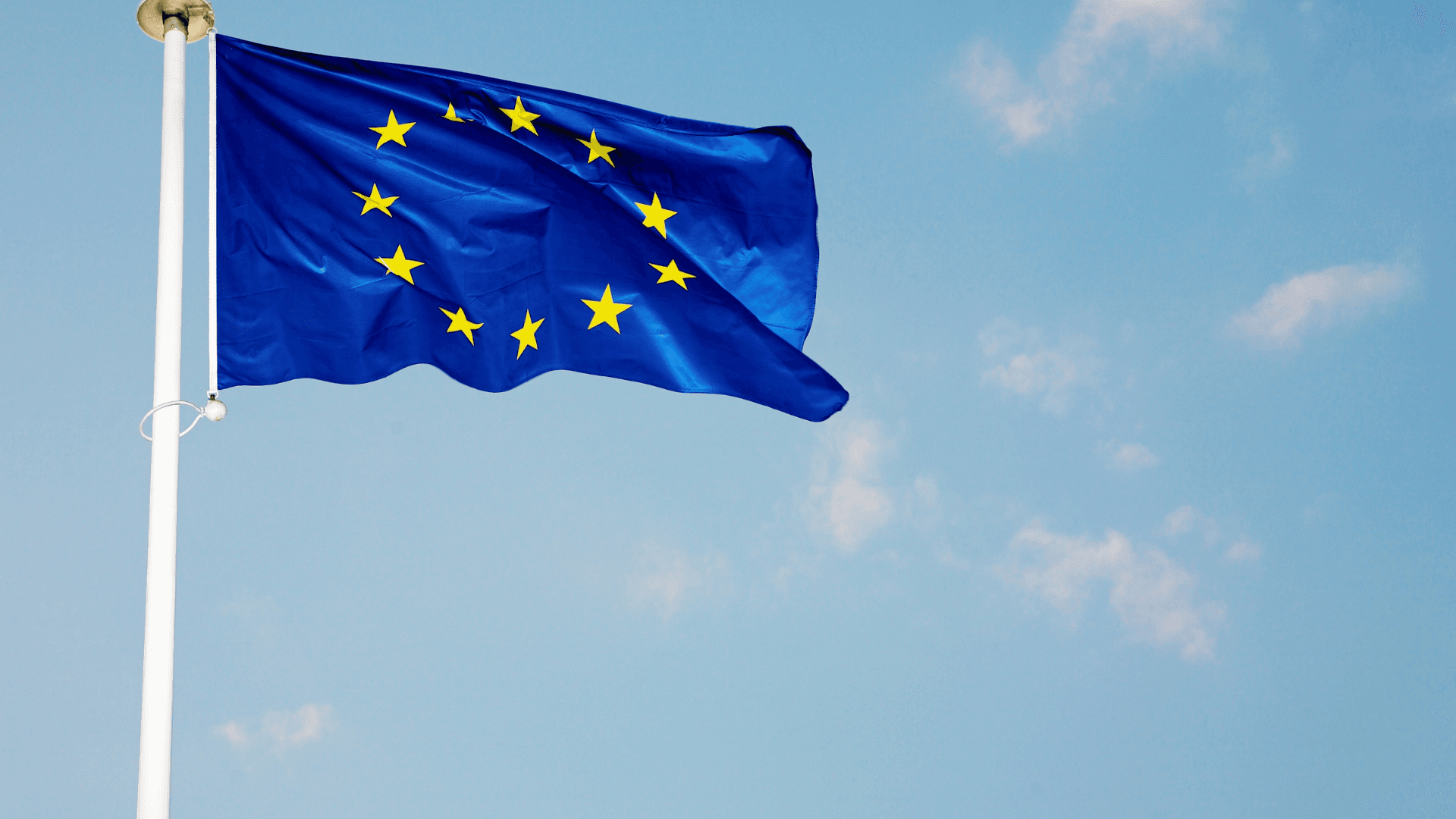
What is the EU taxonomy?
The EU taxonomy - formally known as the Taxonomy Regulation (EU 2020/852) - is a classification system that defines which economic activities are considered environmentally sustainable within the EU. Simply put: it is the EU's official answer to the question what does "green" actually mean?
The idea is to direct capital toward sustainable activities that contribute to a climate-neutral and nature-friendly economy - and to prevent investors and banks from being misled by vague sustainability claims. The taxonomy is, in other words, a tool against greenwashing, but above all a tool for making the EU's green financing comparable and credible.
The Taxonomy Regulation was adopted by the European Parliament and the Council in June 2020 as part of the so-called EU Sustainable Finance agenda, and has been fully applicable since 2023. It is closely linked to other regulations such as CSRD (Corporate Sustainability Reporting Directive) and SFDR (Sustainable Finance Disclosure Regulation, which governs how financial actors communicate sustainability in their products).
Six environmental objectives - and a strict requirement
The EU taxonomy is built around six environmental objectives: climate change mitigation, climate change adaptation, sustainable use and protection of water and marine resources, transition to a circular economy, pollution prevention and control, and protection and restoration of biodiversity and ecosystems.
For an economic activity to be considered environmentally sustainable under the EU taxonomy, it must meet three requirements: the activity must make a substantial contribution to at least one of the six environmental objectives; it must not cause significant harm to any of the other objectives (the DNSH principle - Do No Significant Harm); and it must meet minimum standards for human rights and labor law under the ILO's core conventions.
It is not enough to do something good on one front - the activity must also not cause significant harm on another. A wind farm that destroys a protected natural area, for example, is not classified as environmentally sustainable under the taxonomy, despite lower climate emissions.
The technical screening criteria (the concrete thresholds for what counts as a substantial contribution) are established by the European Commission and specify under which conditions an activity shall be considered sustainable under the EU taxonomy.
Who is required to report under the taxonomy?
The Taxonomy Regulation itself is not a reporting requirement - it is a definitional system. But CSRD requires companies within its scope to disclose what share of their turnover, capital expenditure, and operating expenditure is aligned with the taxonomy. Financial actors such as funds and banks must also, via SFDR, disclose to what extent their products invest in taxonomy-aligned activities.
The economic activities subject to reporting requirements are those carried out by companies that are required to report under the CSRD. Following the EU's Omnibus I Directive, adopted in February 2026, the CSRD now applies to companies with more than 1,000 employees and a net turnover exceeding EUR 450 million (approximately SEK 4.9 billion under the Swedish legislative proposal).[¹] The EU's Stop-the-Clock Directive (April 2025) had previously postponed reporting for the so-called second wave by two years. With the new thresholds, most of these companies now fall entirely outside the requirements.[²] In Sweden, the new rules are proposed to take effect on 1 January 2027.
Your company is most likely not directly required to report against the EU taxonomy today. But that does not mean you can ignore it.
Getting questions about your climate data? Generate your VS report automatically with GoClimate.
Why does the taxonomy affect you as an SME?
The value chain is the key. The large companies that are required to report under the taxonomy need data from their suppliers in order to do so. They cannot report their scope 3 emissions or assess whether their procurement is aligned with sustainable activities without suppliers, often SMEs, providing the underlying data.
In practice, Swedish SMEs are already feeling this: customers and procurement managers are requesting climate data and environmental impact information as part of supplier qualification; banks are asking more questions about sustainability ahead of credit assessments; and investors want to see that portfolio companies can report their climate impact in a structured way.
It is not a legal obligation - but it is a market pressure that is growing rapidly. Not having visibility into your business's sustainability data risks becoming a commercial obstacle.
The taxonomy is a regulation within a broader context
It is easy to confuse the various initiatives within EU sustainability legislation. Here is a quick overview:
CSRD is the reporting regulation. It determines that large companies must report on sustainability and how — including through the European Reporting Standards ESRS.
The EU taxonomy is a definitional system that CSRD refers to. It determines which economic activities are considered environmentally sustainable.
SFDR regulates how financial actors communicate sustainability in their products — funds, pension savings, green bonds.
EU Green Bond Standard is a specific certification system for green bonds, which also requires that the financed projects are aligned with the taxonomy.
VS (EU’s Voluntary Sustainability Standard) is the voluntary sustainability standard for SMEs, developed by EFRAG. It serves as a natural entry point into sustainability reporting without requiring the same depth as the full ESRS standards.
The taxonomy is evolving - and being supplemented
The EU taxonomy is not a static document. The technical screening criteria are updated on an ongoing basis as research and technology develop, and more sectors, such as agriculture and forestry, have received or are in the process of receiving their own criteria for which activities shall be considered sustainable.
An important discussion is also underway regarding how the taxonomy's criteria relate to regulations in other countries. At the end of 2023, more than 50 countries were developing their own green taxonomies. Work is ongoing to harmonize these systems, including through the so-called Common Ground Taxonomy developed jointly by the EU and China, to avoid a fragmented global landscape where investors are forced to navigate a maze of incompatible standards.
What should you as an SME do now?
You most likely do not need to report against the taxonomy today. But there are things you can do to stay ahead — and to avoid finding yourself in a situation where customers or banks request data you don't have.
- Map your business's climate impact. This is the foundation of all sustainability data and the most common thing a customer or bank actually asks for.
- Assess where you sit in the value chain. Do you supply large companies with CSRD obligations? The more your business is exposed to actors with reporting requirements, the more likely it is that those requirements will reach you.
- Familiarise yourself with EU’s voluntary standard VS. The standard was developed specifically for SMEs and provides a way to structure sustainability data without requiring the same resources as full CSRD reporting.
- Collect data systematically. The hardest part of sustainability reporting is rarely the analysis — it's the data collection. Having a handle on energy consumption, emissions data, and supplier information saves an enormous amount of time when requirements become urgent.
Have the answers ready when the question comes. GoClimate pulls your sustainability data straight from your bookkeeping.
Summary
The EU taxonomy is a classification system that defines which economic activities are considered environmentally sustainable within the EU. It is not a reporting requirement for SMEs, but it shapes the requirements that large companies, banks, and investors place on their suppliers. For Swedish SMEs, this means sustainability data is increasingly requested in procurement processes, credit assessments, and customer relationships, regardless of whether you are formally required to report.
Understanding the taxonomy's criteria is not about becoming an expert in an EU regulation. It is about understanding where the market is heading and having the right data ready when the question comes.
Frequently asked questions about the EU taxonomy
Does my company have to report against the EU taxonomy?
Probably not — yet. Direct reporting obligations apply to large companies under CSRD.
What does apply right now is indirect pressure: customers, banks, and investors who themselves have reporting obligations need data from their suppliers — and that includes you.
What is the difference between the EU taxonomy and CSRD?
CSRD is the reporting regulation — it determines that large companies must report on sustainability and how. The EU taxonomy is one of the tools CSRD refers to in order to define which economic activities are considered environmentally sustainable. You can think of the taxonomy as a dictionary and CSRD as the rules for how and when you must use it.
What does the DNSH principle mean?
DNSH stands for Do No Significant Harm. It is a requirement within the EU taxonomy stating that an activity must not only make a substantial contribution to one environmental objective — it must also not cause significant harm to any of the other five. A factory that drastically reduces its carbon emissions but in the process pollutes a waterway therefore does not meet the taxonomy's criteria.
Are there taxonomies in other countries?
Yes. At the end of 2023, more than 50 countries were developing their own green taxonomies, including China, the United Kingdom, Canada, and several emerging markets. Work is ongoing to harmonize these systems globally to facilitate cross-border investment and avoid each market building its own parallel system.
What is the voluntary EU standard and how does it relate to the taxonomy?
VS is a voluntary sustainability reporting standard developed specifically for SMEs by EFRAG (European Financial Reporting Advisory Group). It is not directly linked to the EU taxonomy, but serves as a practical way for SMEs to structure and communicate their sustainability data to customers and financiers who themselves are subject to CSRD requirements. VS is SMEs' natural entry point into sustainability reporting, without requiring the same depth and resources as full CSRD reporting.
Does the taxonomy only cover climate?
No. The EU taxonomy covers six environmental objectives, of which climate is one. In practice, the technical screening criteria for the climate objectives (objectives 1 and 2) have progressed furthest in their application. Criteria for the four remaining environmental objectives were established in the Environmental Delegated Act (2023/2486), applicable from January 2024, but coverage and level of detail still vary between sectors. Discussions are also ongoing about supplementing the system with a social taxonomy that would cover social and labor market factors in a similar way.
How do I know whether an activity is taxonomy-aligned?
This is determined by technical screening criteria established by the European Commission for each sector. The criteria specify concrete thresholds for under which conditions an economic activity shall be considered sustainable under the EU taxonomy, for example, what level of carbon emissions per kilowatt-hour is required for electricity generation to make a substantial contribution to the climate objectives. These criteria are updated on an ongoing basis as technology and research evolve, and currently cover sectors such as energy, transport, manufacturing, buildings, and agriculture.
For most SMEs, the practical question is not "do my activities fall within the taxonomy?" but rather "can I provide the climate data my customers and financiers need?" - and that is a question of having visibility into your energy consumption, your emissions, and your supply chain.
Want to know whether your company is affected — and what you should do now? GoClimate automatically collects sustainability data from your accounting and helps you report according to the VS EU standard. Book a free consultation now.
Sources
Recommended reading
Want to go from knowledge to action?
See how GoClimate turns your accounting into a report you can act on.