What is Circular Economy?
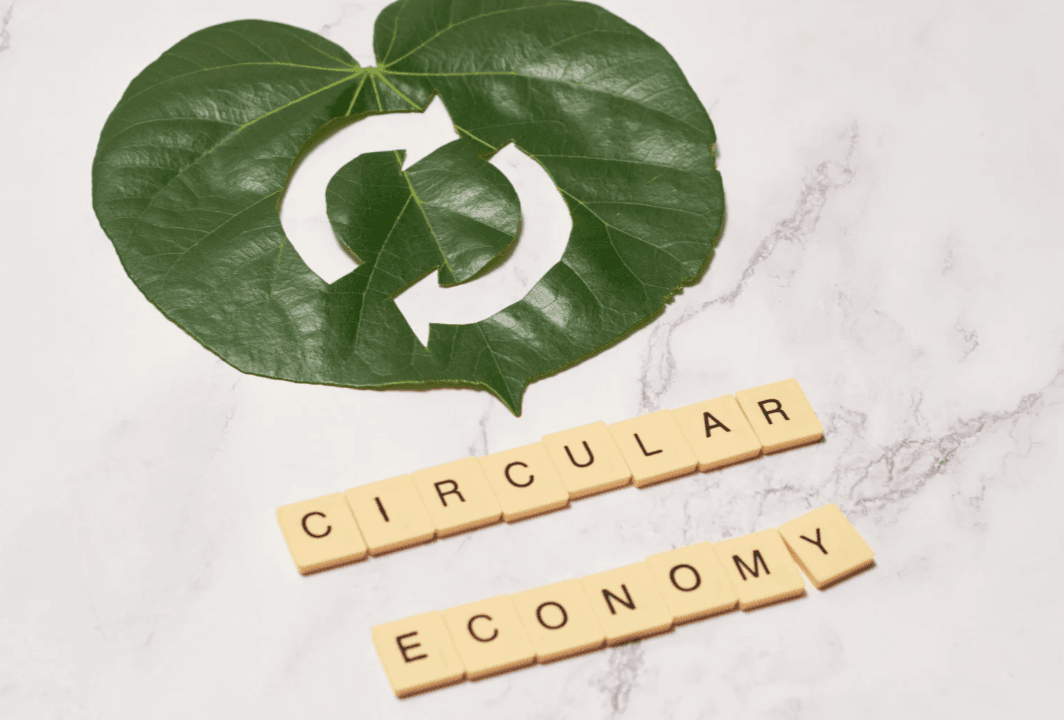
Circular economy is about using things for longer, repairing them when they break and making use of the materials when they’re worn out. The goal is to throw away as little as possible and take as little new from nature as possible.
That might sound obvious. Yet only 6.9 percent of all materials in the global economy are recycled or reused [1]. The rest is newly extracted, and most of it ends up as waste.
Linear economy
The economy we have today is called linear. We take raw materials, make products, use them for a while and throw them away. The whole system relies on there always being new raw materials to draw from.
This creates a lot of waste and wears down nature. It also leaves companies vulnerable when raw material prices rise or supply chains run into trouble.
Circular economy: keep the value
In a circular economy, the idea is instead to keep products and materials in circulation for as long as possible. It starts on the drawing board. A product that’s easy to repair, upgrade and take apart lasts longer and is easier to recycle.
It also opens the door to new business models, such as rental, sharing, remanufacturing and product-as-a-service, where the customer pays to use something rather than own it.
Why do we need the transition?
The extraction of natural resources has tripled in 50 years [2]. Extracting and processing resources accounts for more than half of the world’s greenhouse gas emissions [3]. Extraction of biomass from agriculture and forestry is behind 90 percent of land-related biodiversity loss [2].
Sweden isn’t exactly a frontrunner here either. The Swedish economy is only 3.4 percent circular [4]. In other words, there’s a lot to gain from using what we already have more wisely.
What do the EU and Sweden say?
The EU adopted a circular economy action plan in March 2020 as part of the European Green Deal [5]. New rules have followed since then. The Ecodesign Regulation can require products to last longer and be repairable, and the Right to Repair Directive makes it easier for consumers to get things fixed [6].
The EU Taxonomy is a system that determines which activities count as sustainable. One of the Taxonomy’s six environmental objectives is the transition to a circular economy [7]. Circularity is also tied to the climate targets. Under the European Climate Law, net emissions must fall by at least 55 percent by 2030 compared to 1990, and the EU must be climate neutral by 2050 [8].
Sweden has had its own national strategy for circular economy since 2020 [9].
Wondering how the rules affect your business? Book a meeting with us!
How your business can become more circular
- Design for a long lifespan. Make products that are easy to repair, upgrade and recycle.
- Choose materials carefully. Use recycled or bio-based materials where possible, and minimise waste in production.
- Try new business models. Rental, repair services and second-hand can bring in new revenue while making resources go further.
- Take care of your waste. Cleaner waste streams make it easier to recycle more.
Do you know what your company buys today? With GoClimate, you get the overview automatically through invoices and receipts.
What makes it hard
It’s often cheaper to buy new than to repair. It’s also hard to know which materials and chemicals a product contains, which makes recycling more complicated.
On top of that, throwaway habits are hard to break, and in many places there are no systems for collection and reuse. Nobody has to solve everything at once, but we do need to get started!
Start by measuring
To know where you can make a difference, you first need to know where you stand. The voluntary VS standard for small and medium-sized enterprises has its own section on resource use, circular economy and waste management [10].
Create a VS report with GoClimate.
Take the first step
The transition to a circular economy requires changes in policy, the economy and our habits, but every company can start within its own operations. With the right data, it’s easier to see where your resources go and where you can save.
Get started with GoClimate and get your sustainability report done, without doing the maths yourself.
Sources
- Circularity Gap Report 2025 – Circle Economy & Deloitte
- International Resource Panel/UNEP – Global Resources Outlook 2024
- Down To Earth – UNEA-6: Global Resources Outlook 2024
- Circularity Gap Report Sweden
- European Parliament – New circular economy action plan
- Council of the European Union – Directive 2024/1799 and Regulation 2024/1781; Renoon – Right to repair and ESPR
- Fichtner – EU Taxonomy (Regulation 2020/852)
- European Commission – European Climate Law
- Government Offices of Sweden – Cirkulär ekonomi: strategi för omställningen i Sverige (Circular economy: strategy for the transition in Sweden)
- EFRAG – VSME Basic Module, resource use and circular economy
Want to go from knowledge to action?
See how GoClimate turns your accounting into a report you can act on.