CBAM – the carbon border tax that affects importing businesses
Does your business import steel, aluminium, cement or fertilisers from outside the EU? Then CBAM (often called the carbon border tax) is something you need to know about.
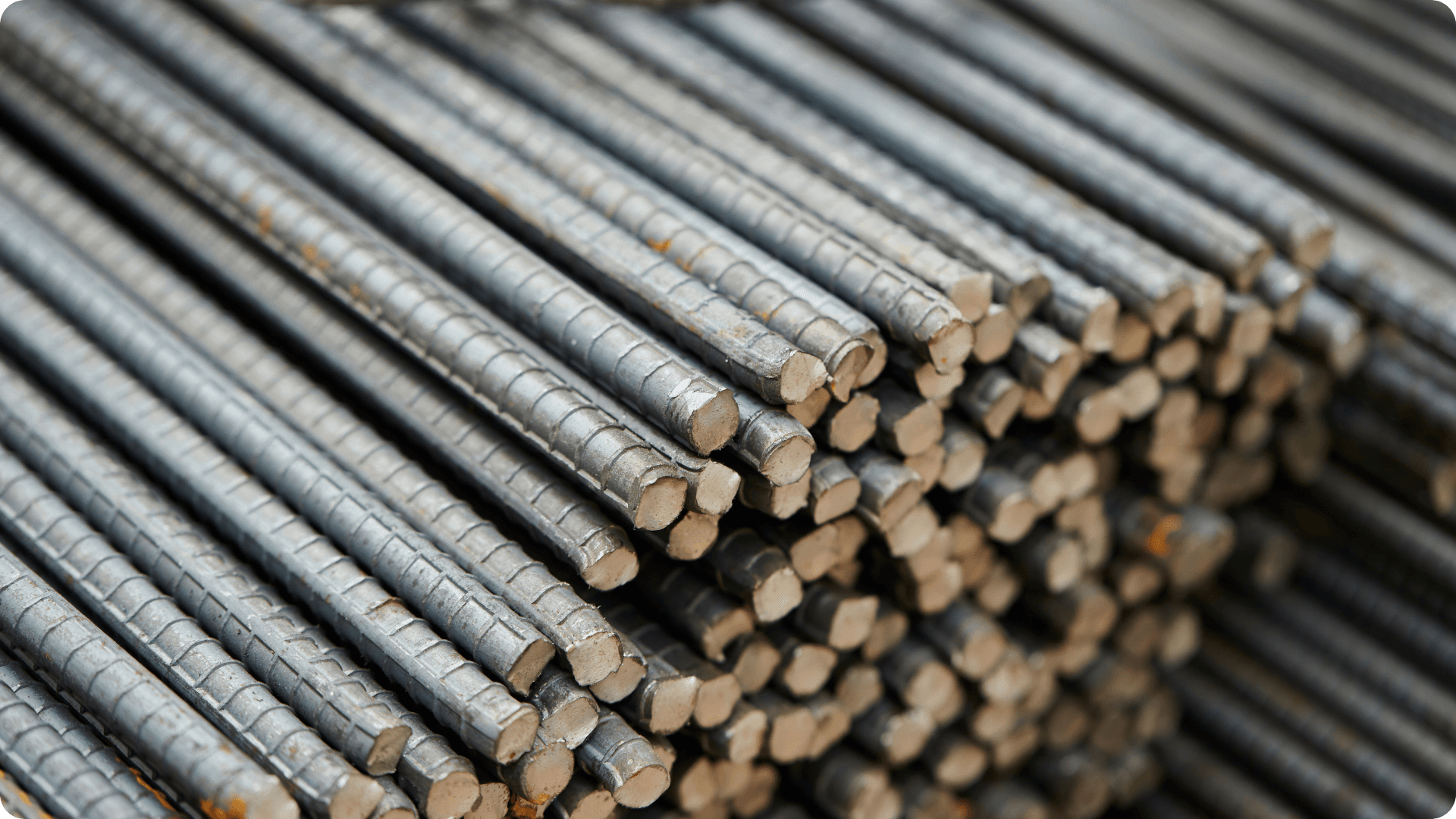
From 2026, the EU's Carbon Border Adjustment Mechanism applies in full. For importing SMEs, that may mean new costs and new admin, and you'll need to understand how much carbon is actually in the things you buy.
CBAM is about the emissions behind what you buy, and so is your own climate data. GoClimate calculates your company's emissions automatically from invoices and receipts, so you have the numbers ready when customers, banks or suppliers ask. Get started with GoClimate
What is CBAM?
CBAM, the Carbon Border Adjustment Mechanism, is an EU regulation that entered into force in 2023 and has applied in full since 1 January 2026 [¹]. Put simply, it puts a price on the carbon embedded in imported goods. That price matches what EU producers already pay through the EU Emissions Trading System (EU ETS). So it isn't a traditional customs duty on the value of the goods. It's a carbon charge on the emissions behind them.
CBAM has two goals. The first is to prevent carbon leakage, which is when emissions-heavy production moves outside the EU to avoid carbon costs. The second is to make sure imported goods don't get an unfair advantage over European producers, who already pay for their emissions. Importers will therefore pay a similar carbon price to the one European producers already pay.
Which goods and sectors does CBAM cover?
CBAM applies to goods imported into the EU in six sectors:
- Iron and steel
- Aluminium
- Cement
- Fertilisers
- Electricity
- Hydrogen
These sectors were chosen because they emit a lot of carbon. They also carry a high risk of carbon leakage, meaning production could move to countries with weaker climate rules.
From 2028, the list could get longer. The EU wants CBAM to also cover goods that contain a lot of steel or aluminium. Exactly which goods isn't decided yet. The European Commission proposed around 180 products, EU member states want around 200, and the European Parliament wants as many as 457. Now they need to agree on a shared list [¹¹][¹²].
Worth noting: it's not your industry that decides whether CBAM affects you, but what you import. An engineering firm that buys steel from Turkey is affected if it imports more than 50 tonnes of CBAM goods a year. The same goes for a construction company that imports aluminium profiles from China.
CBAM only applies to goods from outside the EU. Norway, Iceland, Liechtenstein and Switzerland are also exempt, because their carbon pricing systems are linked to the EU's [¹]. And if you don't import any goods on the CBAM list, it doesn't affect you.
Two phases: first reporting, then payment
CBAM has been rolled out in two steps.
The transitional phase (October 2023–December 2025): Importers had to report the emissions from their imported goods every quarter, but didn't have to pay anything. It was a trial run to collect data and get the system ready [³].
The definitive phase (from 1 January 2026): Now it's for real, and CBAM costs money. If you import more than 50 tonnes a year, you need to be an authorised CBAM declarant. You also need to collect verified emissions data for what you import.
Payment happens afterwards. You buy CBAM certificates, one for every tonne of carbon in what you've imported. For imports during 2026, certificates go on sale in February 2027 and must be surrendered by 30 September 2027 [¹][¹⁰].
How much does a certificate cost? The price follows the EU's emissions trading system. For the second quarter of 2026, it was €75.28 per tonne of CO₂ [⁴]. During 2026, a new price is set every quarter, and from 2027 every week [⁴].
Want to keep track of your emissions without the spreadsheet headache? GoClimate pulls the data straight from your bookkeeping. Try GoClimate
The 50-tonne threshold: the key for SMEs
The biggest news for importing SMEs came with the EU's Omnibus package, whose CBAM changes entered into force on 20 October 2025 [⁵]. The headline is a new threshold of 50 tonnes net mass per year.
Importers bringing in less than 50 tonnes a year of the four covered categories (iron and steel, aluminium, cement and fertilisers) are exempt from CBAM obligations. There is no threshold for electricity and hydrogen. If you're exempt, you don't need to apply to become an authorised CBAM declarant, buy certificates or submit a CBAM declaration [⁶].
According to the European Commission's own calculations, the threshold exempts around 90 percent of all importers, mostly SMEs. The remaining 10 percent still account for 99 percent of the relevant emissions [⁷].
Key details about the threshold:
- Total for the whole EU: The 50 tonnes refers to your total imports of CBAM goods into the EU, not per shipment.
- Not for electricity and hydrogen: Importers of electricity or hydrogen must be authorised declarants regardless of volume [⁵].
What will it cost in practice?
The cost is based on the embedded emissions in what you import, not on the weight or value of the goods. Three things decide the final bill.
The country of production matters a lot. Goods from countries with strong carbon pricing can earn a deduction for the carbon price already paid there. Goods from countries without carbon pricing get no deduction, so those importers will pay more.
CBAM is phased in gradually. As free allowances in the EU ETS are phased out (2026–2034), the share of emissions that must be covered by certificates goes up. In 2026, you don't need to cover 100 percent of the embedded emissions. That share rises step by step until 2034 [³].
Real emissions data means lower costs. If your supplier can provide verified emissions data, your CBAM cost may be lower than with the EU's default values, which tend to be set high. So it pays to ask for emissions data early.
Want to know the emissions in your purchases? GoClimate does the maths for you, straight from your bookkeeping. Try GoClimate
What do you need to do if you're affected?
Step 1: Find out if you import CBAM goods. Go through your import list and look for goods in the six sectors. Check the customs codes for each product. In Sweden, the Swedish Customs Service (Tullverket) and the Swedish Environmental Protection Agency (Naturvårdsverket) publish lists of which CN codes are covered [⁹].
Step 2: Check your volume against the 50-tonne threshold. Do you import more or less than 50 tonnes of CBAM goods a year in total? If you're close, run the numbers carefully and have a plan in case your volume grows.
Step 3: Apply to become an authorised CBAM declarant if you exceed the threshold. You apply in the EU CBAM Registry. In Sweden, you get access through Tullverket's e-services, and Naturvårdsverket handles the application [⁹].
Step 4: Get emissions data from your suppliers. Ask your suppliers outside the EU for product-specific emissions data. Without it, you fall back on the EU's default values, which can be more expensive. Real data also means you can show accurate numbers when customers or lenders ask.
Does your business handle sustainability data for customer or bank requests? Report under the EU's voluntary standard VS (formerly VSME). Book a free walkthrough
Frequently asked questions about CBAM
Does CBAM affect my business if I'm not in the steel or cement industry?
Yes, if you import CBAM goods. CBAM affects you as an importer of the six product categories, not as a company in those sectors. A consultancy or trading company that imports aluminium components from China, or another country outside the EU, is affected. Your own production inside the EU, however, falls under the EU ETS, not CBAM. What matters is what you buy and where it comes from.
What happens if I import more than 50 tonnes without being an authorised CBAM declarant?
Since 1 January 2026, customs authorities check whether importers are authorised CBAM declarants. If you're not, the goods won't be released for import. Always apply before you go over 50 tonnes, or you risk an import stop and penalties.
What are "embedded emissions"?
The greenhouse gas emissions created when a product is made in the country of production. That's the carbon "embedded" in the product, not the emissions from transport. For simple goods like steel bars, it's the emissions from the manufacturing process. For complex goods made of several materials, the emissions from the components are added together.
What does it mean that the certificate price is linked to the EU ETS?
The price reflects the EU's carbon market and moves with supply and demand. For Q2 2026, it was set at €75.28 per tonne of CO₂e [⁴]. So the cost isn't fixed. It's updated quarterly during 2026 and weekly from 2027.
Can I get a deduction if my supplier has already paid a carbon tax in their country?
Yes. If your supplier can show that a carbon price has already been paid in the country of origin, it's deducted from your CBAM cost. That's another reason to talk to your suppliers about their carbon charges and emissions data.
Does the 50-tonne threshold apply per shipment or per year?
Per year, for all your imports of CBAM goods into the EU combined. Note that the threshold doesn't apply to electricity and hydrogen [⁵].
Sources
- EU-kommissionen – Carbon Border Adjustment Mechanism
- OneClickLCA – CBAM: A guide to Carbon Border Adjustment Mechanism
- KPMG – CBAM regler för övergångsperioden 2023–2025
- European Commission – Price of CBAM certificates
- ICAP – EU adopts simplifications of CBAM rules ahead of compliance phase 2026
- Swedish Environmental Protection Agency – CBAM: carbon price on imports
- EY – The European Commission's proposal to simplify the EU's CBAM rules
- Swedish Environmental Protection Agency – Status as authorised CBAM declarant
- Swedish Customs – Carbon Border Adjustment Mechanism on import (CBAM)
- KPMG Poland – CBAM New obligations and de minimis exemption (2025)
- European Parliamentary Research Service – Extension of CBAM scope to downstream goods (Sept 2026)
- European Commission – Commission welcomes Council agreement on strengthening CBAM (12 June 2026)
Want to go from knowledge to action?
See how GoClimate turns your accounting into a report you can act on.