The Laghum Economy: What if nature had a price?
Today, we pay for the labour behind a product, but almost nothing for the natural resources it requires. The Laghum Economy wants to turn that around with a consumption tax that puts a price on natural resources. We spoke with Lotta Wollentz, Chief Orchestrator at The Laghum Economy, about what that would mean for businesses, and why sustainability reporting becomes more important along the way.
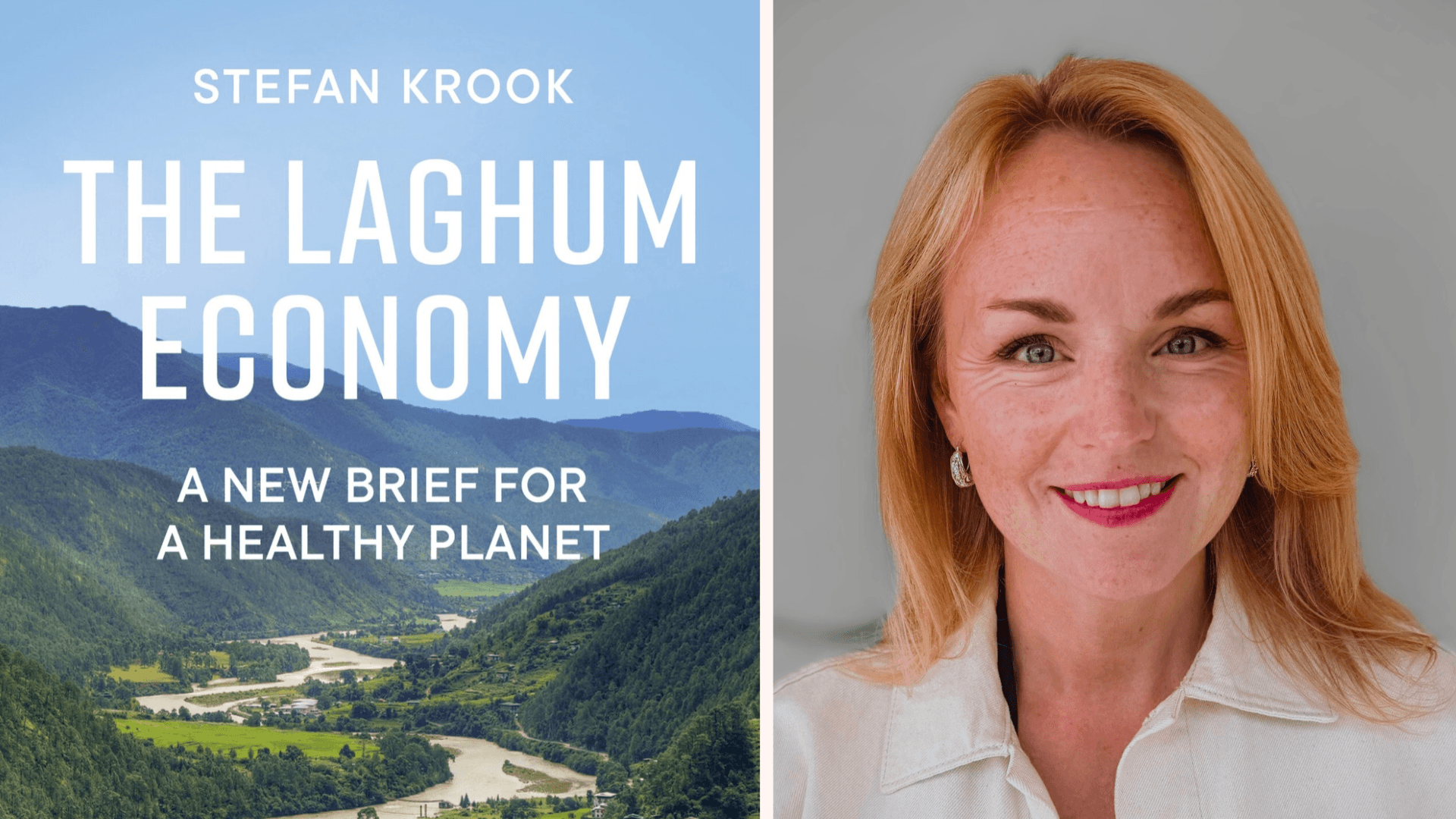
The Laghum Economy describes the pricing of natural resources as one of the greatest market failures in history. It sounds like a claim for economists, but Lotta is an engineer by training.
“Since I stepped into the Laghum world, I’ve learned that economics is fundamentally about managing limited resources,” says Lotta. “If economics is about using resources as efficiently as possible, but nature isn’t part of the equation, then the market fails.”
Laghum’s solution is to shift taxation. A consumption tax puts a price on natural resources at the point of purchase, and the tax on labour is reduced by a corresponding amount.
“The market still gets to be the engine, but now the companies that are smart with nature’s resources are rewarded with better prices and more customers.”
With Laghum, measurement also becomes a competitive advantage
For resource use to be priced, it first has to be measured. That’s where sustainability reporting plays a crucial role, according to Lotta. Regulations such as the CSRD and digital product passports provide some groundwork, but in a Laghum Economy, reporting becomes more than a box to tick.
“A company that reduces its extraction of virgin resources can offer a better price and strengthen its competitiveness. Once that incentive exists, it creates entirely new reasons to measure and report, so the data improves as we gradually move towards a Laghum Economy.”
Companies can start now
Companies don’t need to wait for political decisions to start moving in that direction.
“We already see several examples of companies leading the way, and we need to keep doing just that,” says Lotta.
Her advice is to look at how the business can reduce its extraction of natural resources and to test a shadow price in internal management, so that nature becomes visible in decision-making today. At the same time, the rules of the game need updating, so that sustainability and profitability can truly go hand in hand.
A system shift that requires collaboration
So what does the first step look like, in Sweden or in the EU? The Laghum Economy believes the way forward lies in collaboration between business, civil society, research and policy. The Stockholm School of Economics is now launching research into how a sustainable consumption tax could be implemented. In parallel, they see a government inquiry with a broad mandate as an important step towards working with policymakers to test how a sustainable consumption tax could be introduced gradually.
“Sweden has been bold in major system shifts before, and if we do it together across the Nordics, it will be even stronger.”
Read more about The Laghum Economy here.
Start measuring and managing today. GoClimate produces your sustainability report automatically, using data you already have in your invoices and receipts. Get started with GoClimate →
Want to go from knowledge to action?
See how GoClimate turns your accounting into a report you can act on.