What is Biodiversity?
Biodiversity, or biological diversity, is simply all the variety of life on Earth. It covers plants, animals, fungi and microorganisms, and how they live together.
Life has been evolving for around 3.7 billion years [1]. Yet in just a few hundred years, we humans have managed to push nature back considerably. Today, around one million species are at risk of extinction, many of them within decades [2].
This isn’t just an issue for nature lovers. Nature gives all of us food, clean water, clean air and raw materials. What’s more, more than half of the world’s GDP is moderately or highly dependent on it [3]. When nature loses momentum, so does the economy.
Three levels of biodiversity
Biodiversity covers three basic levels of living organisms: species richness, genetic variation and ecosystem variation.
- Ecosystems: the variety of habitat types, such as rainforests, coral reefs, savannahs, wetlands, mountains and forests. Each ecosystem is its own network of species that depend on one another. Wetlands, for example, purify water, reduce flooding and store large amounts of carbon.
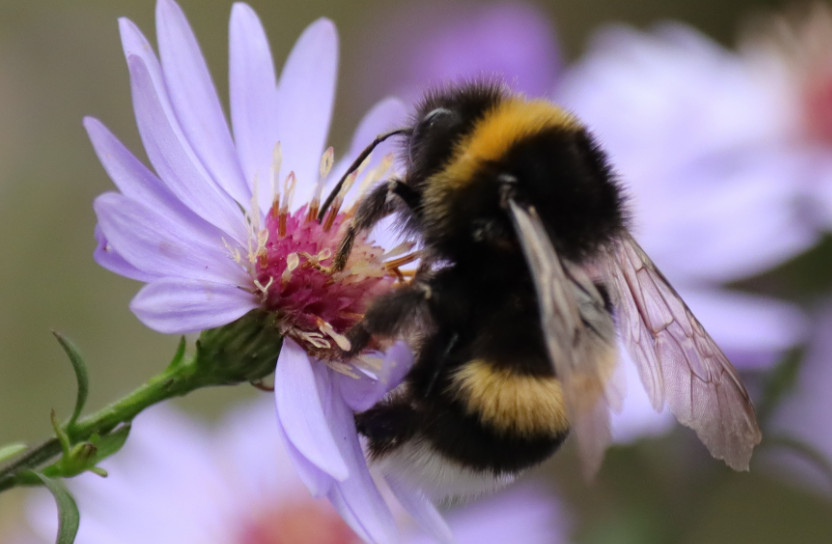
- Species: species richness refers to the number of different species of plants, animals, fungi and microorganisms. The more species there are, the more resilient the ecosystem. Bees and butterflies pollinate, and predators such as wolves keep prey populations in balance. If one species disappears, the whole chain can be disrupted.
- Genes: genetic variation, meaning variation within species, allows species to adapt when something changes, for example when a new disease appears or the climate gets warmer. Some trees cope with drought better than others. The same applies to our crops and livestock, which makes genetic variation essential for food security in the future.
Why is biodiversity important?
Nature does the work for us
Ecosystems provide a range of services we rarely think about but which are vital to people. These are called ecosystem services:
- Pollination: Around 75% of the world’s food crops depend at least partly on animal pollination, including apples, coffee and cocoa [4]. Declining pollinator populations therefore threaten global food harvests.
- Clean water and clean air: Forests capture air pollution, and wetlands filter water and protect groundwater.
- Climate: Forests, peatlands and oceans store huge amounts of carbon. Healthy ecosystems act as carbon sinks and help regulate the climate.
The economy is built on nature
Many industries, such as agriculture, fishing, forestry, construction and tourism, depend on functioning ecosystems. Construction, agriculture and food are the sectors most dependent on nature [3]. When fish stocks are overfished or soil is depleted, it hits both food production and people’s jobs, as well as what businesses and communities can continue to get from nature.
Nature is also a giant pharmacy. Penicillin comes from a mould, and many other medicines originate from plants and other genetic resources. Every species that disappears could be a cure we never had the chance to discover.
Good for our health
Spending time in nature reduces stress and improves concentration, and green spaces in cities make a big difference to public health. When ecosystems are destroyed and animals are pushed out, the risk of diseases spreading from animals to humans also increases.
Protection against extreme weather
Forests, wetlands, mangroves and coral reefs act as natural buffers against storms, floods and erosion. Intact ecosystems also retain moisture in the soil, help society cope with a changing climate and reduce the risk of drought and wildfires.
What threatens biodiversity?
The UN’s expert panel on biodiversity, IPBES, has ranked the five biggest threats, from largest to smallest [2]. Since 1970, the world’s monitored populations of wild vertebrates have declined by an average of 73%, which shows how serious the loss of biodiversity is [5]:
- Changes in land and sea use: forests being cleared, and land turned into farmland or built up. Species simply lose their habitats, and forests are a clear example of an ecosystem under pressure from land exploitation.
- Overexploitation: fishing, hunting and logging on a larger scale than nature can recover from.
- Climate change: warmer and more unpredictable weather makes it hard for many species to keep up. Coral reefs bleach and die mainly because of marine heatwaves, and ocean acidification weakens them further [6].
- Pollution: plastic in the oceans, pesticides and air pollution.
- Invasive species: species that end up in new environments and outcompete those already there.
Of the more than 172,000 species assessed by the IUCN, around 28% are threatened with extinction [7].
Do you know how large your company’s emissions are? With GoClimate, your carbon footprint is calculated automatically from your accounts, no spreadsheets needed. Calculate your company’s carbon footprint.
What’s the situation in Sweden?
Sweden has rich nature, from mountains and old-growth forests to coastlines and wetlands. But roughly one in four species in the country, 4,746 species, is now on the Red List [8][9]. The factor affecting the most red-listed species is how land is used in agriculture and forestry [10], with consequences for many plant and animal species. Overgrowth of meadows and pastures, when grazing and mowing stop and shrubs and trees take over, also harms biodiversity.
Three examples:
- Wild bees: Around a third of Sweden’s bees and bumblebees are red-listed [11].
- Baltic cod: The eastern stock is so weak that targeted cod fishing has been banned since 2019 [12].
- Butterflies: Two butterfly species, the scarce fritillary and the Glandon blue, are feared to have gone extinct in Sweden in recent years [13].
But there are bright spots. The white-tailed eagle and the otter have recovered enough to be removed from the Red List [8]. This shows the trend can be reversed, but continued action across different habitat types and connected landscapes is essential.
What does biodiversity have to do with your company?
More than you might think. In 2022, the world’s countries agreed on a new global agreement for nature, the Kunming-Montreal framework. One of its targets is to protect at least 30% of the planet’s land and sea by 2030 [14]. Work on biodiversity is also guided by targets at EU and national level, such as the EU Nature Restoration Regulation and Sweden’s environmental quality objective “A Rich Diversity of Plant and Animal Life”. Another target in the framework is for large companies and financial institutions to disclose their impacts and dependencies on nature [15].
This is already showing up in reporting. The VS sustainability standard (formerly VSME), which more and more banks and large customers are requesting from smaller companies, has its own disclosure on biodiversity. Among other things, companies must state whether any of their sites are located in or near a biodiversity-sensitive area [16].
Has your bank or a customer asked for a sustainability report? With GoClimate, you can complete your VS report in 30 minutes. We guide you step by step, including through the biodiversity section. Get started with your VS report.
What can we do?
As a society:
- Protect and restore natural areas, for example through more nature reserves and restored wetlands, with authorities and society working together to preserve nature.
- Promote agriculture and forestry that leave room for nature.
- Species need habitats and functioning dispersal routes so they can spread between areas.
As a company:
- Find out where your impact lies. For most companies, most of the impact sits in purchasing, not in their own operations.
- Choose certified and sustainably produced goods, especially wood, paper, food and textiles.
- Calculate and cut your emissions, since climate change is one of the biggest threats to nature.
- Review your own premises and land: is there room for green spaces, meadows or trees?
As an individual:
- Eat more plant-based food and waste less.
- Choose organic products to reduce the use of chemical pesticides and help nature.
- Cut down on plastic and single-use products.
- Let part of your lawn become a meadow, so bees and butterflies have food.
Want to know where your company’s biggest impact is? GoClimate collects data directly from invoices and receipts and shows which purchases weigh the most.
Nature is an investment
Biodiversity, with living nature and functioning ecosystems, is the foundation of the food we eat, the water we drink and the society and economy we live on. Protecting it isn’t charity. It’s taking care of what everything else rests on. And the earlier you start, the easier it gets.
Not sure where your company should start? Book a free 30-minute demo and we’ll help you find the right path. Book a demo.
Sources
- Videnskab.dk: The oldest traces of life are 3.7 billion years old (in Danish)
- IPBES Global Assessment 2019 (press release)
- World Economic Forum: Half of World’s GDP Moderately or Highly Dependent on Nature
- IPBES: Pollinators, Pollination and Food Production
- WWF: Living Planet Report 2026 (press release, in Swedish)
- NOAA: Corals and climate change
- The National: Arctic seals face extinction threat as global bird population falls, new Red List shows
- TV4: New figures – 5,000 species threatened (in Swedish)
- SLU Swedish Species Information Centre: Red-listed species in Sweden 2025
- SLU Swedish Species Information Centre: Red-listed species in Sweden 2020
- SVT: Fewer and fewer wild bees (in Swedish)
- Swedish Parliament: Written question on bottom trawling (in Swedish)
- SLU Swedish Species Information Centre: The state of red-listed butterflies and burnet moths (2022, in Swedish)
- CBD: Kunming-Montreal Global Biodiversity Framework
- Global Policy Journal: The Kunming-Montreal Global Biodiversity Framework is a milestone
- EFRAG Knowledge Hub: VS, B5 – Biodiversity
Recommended reading
Want to go from knowledge to action?
See how GoClimate turns your accounting into a report you can act on.