Planetary boundaries – what do they really mean, and why do they matter to all of us?
Planetary boundaries are about something both simple and profound: how much we humans can affect the Earth before we disrupt its balance in ways that have serious consequences.
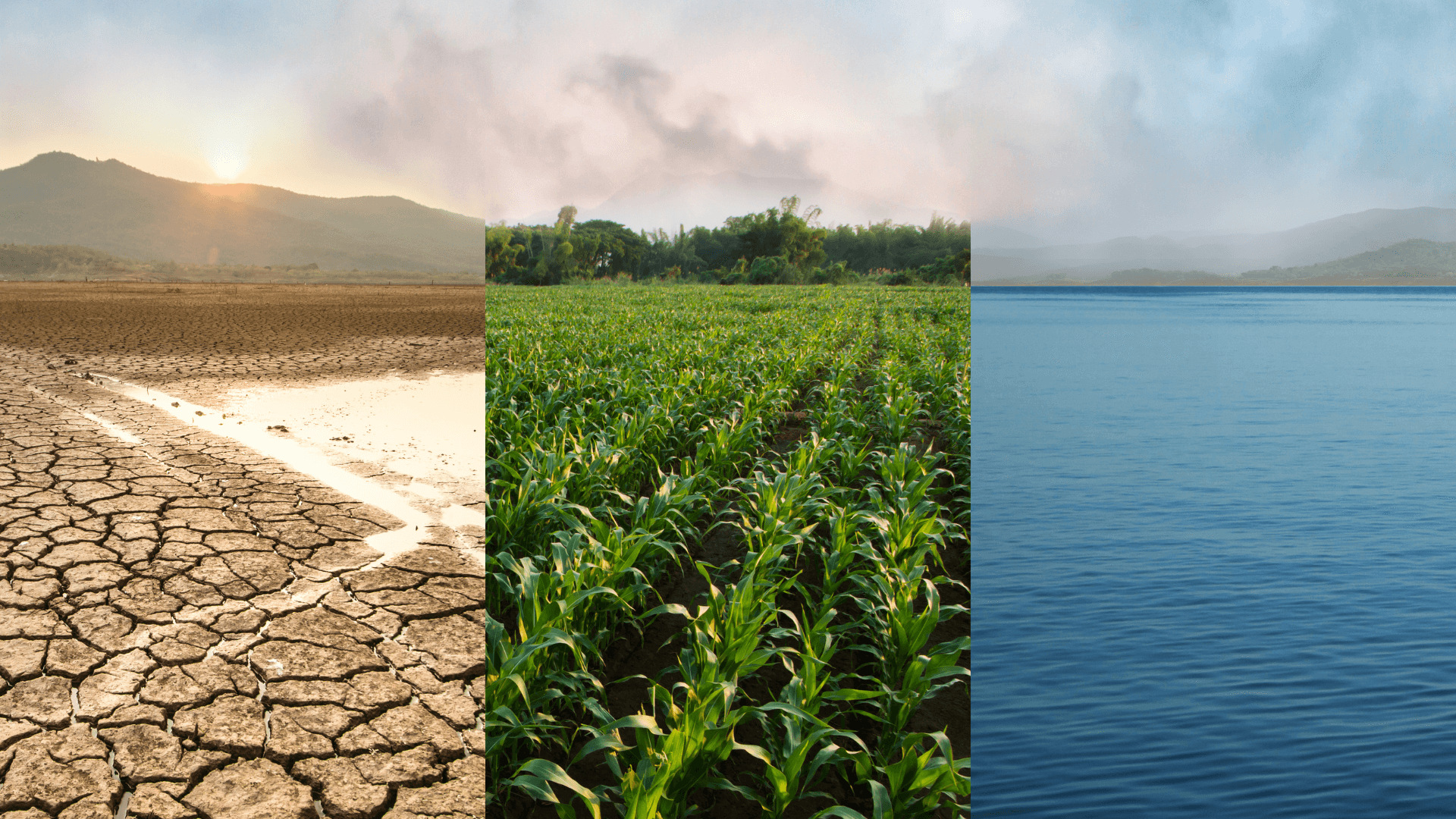
What are planetary boundaries?
Research shows that our societies and ecosystems depend on a number of stable systems – for example, the climate, the oceans, the land, and biodiversity. When we push them too hard, the risk increases that the planet will tip into new, irreversible states (1). Scientists have identified nine such "boundaries" that together form a kind of safety framework for humanity. The idea is not that nature should stand still – it should continue to be dynamic and alive – but we need to stay within a global safe zone where life, as we know it, can continue to flourish. For those of you working in sustainability, communications, or strategy, planetary boundaries can be a powerful tool: a way to place your efforts in a broader context, understand the connections between different environmental challenges – and make better, more informed choices.
Developed by researchers at Stockholm Resilience Centre
The Planetary Boundaries framework was developed by researchers at the Stockholm Resilience Centre, led by Johan Rockström, and first published in 2009 in the journals Ecology and Society and Nature (2). The core of the model is this: Earth has several vital systems – such as the climate, the oceans, nutrient flows, and biodiversity – that together create stability. For each system there is a boundary – a point at which research indicates that the risk of rapid or irreversible change increases. When one boundary is crossed, it often affects several other systems, because everything is interconnected. The framework therefore works as a map of where we are still operating in safe zones – and where we have already gone too far. In short: it is about understanding the planet's warning signals in time – so that we can act before the changes become impossible to stop.
Nine planetary boundaries
Scientists have identified nine processes that are critical for the Earth to remain habitable (3):
- Climate change
- Loss of biodiversity
- Biogeochemical flows – particularly nitrogen and phosphorus
- Land-system change
- Freshwater change
- Ocean acidification
- Stratospheric ozone depletion
- Atmospheric aerosol loading
- Introduction of novel entities
These processes are interconnected like cogs in a machine. When one cog starts to slip, the whole system risks falling out of balance
Where do we stand today?
The short answer: we have already gone too far in several areas. According to the latest research from 2025, several studies show that seven of the nine planetary boundaries are now exceeded (4). An updated analysis from the Stockholm Resilience Centre and the Potsdam Institute for Climate Impact Research (PIK) shows that global biosphere integrity, nitrogen and phosphorus flows, land use, the climate, changes in freshwater systems, and the introduction of novel entities (chemical pollutants) are all outside the safe zone. In addition, new PIK data shows that over 60% of the world's land area has already left the safe operating space for functional biosphere integrity (5). Another study published in Nature (2025) indicates that – if current trends continue – all planetary boundaries except the ozone layer risk being exceeded before 2050 (6). And the Planetary Health Check 2025, produced by the Potsdam Institute for Climate Impact Research (PIK), confirms that seven boundaries have already been exceeded, including ocean acidification, which for the first time is confirmed as having been crossed (7). This does not mean that all hope is lost – but that we are in a critical period where our choices matter more than ever. At the same time, the experience with the ozone layer shows that global decisions and cooperation do make a difference: the ozone layer is recovering thanks to the Montreal Protocol.
Why does this matter for sustainability work?
Planetary boundaries help us see the whole picture: that the climate, the oceans, the land, and life on the planet are not separate issues, but parts of the same system. For sustainability work, this means that climate goals cannot stand alone – they need to be linked to biodiversity, water use, land, and chemicals.
For companies and organisations, this means, among other things:
Sustainability goals need to be set in a global context. It becomes clear which areas have already been exceeded, and where action makes the greatest difference. You risk missing important dependencies if you focus only on the climate. The framework helps you link your goals to scientific reference frameworks – for example through the Science Based Targets initiative.
In short: working within planetary boundaries is not just about "doing good" – it is about building resilience and future-proofing your operations.
How you can start taking action
This framework may sound overwhelming, but it can be made concrete. Here are five steps to get started:
Identify and understand. Which of the nine boundaries are most relevant to your operations? Is it emissions, land use, water, or chemicals? Map your current situation – where do you stand today compared to the global boundaries.
Prioritise. Focus on the areas where you have the greatest impact and where the boundary has already been exceeded or is close to being so. Think systemically – one action risks affecting other boundaries.
Set goals and follow up. Set clear, science-based goals that reduce negative impact or restore natural processes.
Communicate and engage. Share how your work connects to planetary boundaries – this shows that you are grounding your work in research and recognised sources. Involve suppliers and customers in understanding why their choices matter.
Renew and collaborate. Evaluate how your products and processes can become more circular and regenerative. Collaborate with others – we achieve the greatest impact when we act together.
Summary
Planetary boundaries clearly show that humanity has already exceeded several of the Earth's stabilising systems – and that this increases the risk of sudden and irreversible changes. But they also show the way forward.
Change is still possible. Research tells us that every year, every decision, and every action counts. Our choices today will determine whether future generations get to live on a planet in balance.
So, start with one boundary. Do a simple current-state analysis. And take a step – large or small – towards keeping humanity within the planet's safe zone. 🌿
Do you need help getting started with your sustainability reporting? Get in touch – we help small and medium-sized businesses find a solution that fits their needs, ambitions, and resources.
Sources
- [1] Rockström, J. et al. (2009). Planetary boundaries: exploring the safe operating space for humanity. Ecology and Society, 14(2):32.
- [2] Rockström, J. et al. (2009). A safe operating space for humanity. Nature, 461, 472–475.
- [3] WWF Sverige (2023). Inom planetens gränser.
- [4] Richardson, K. et al. (2023). Earth beyond six of nine planetary boundaries. Science Advances.
- [5] Stenzel, F. et al. (2025). Breaching planetary boundaries: Over half of global land area suffers critical losses in functional biosphere integrity. One Earth.
- [6] Stockholm Resilience Centre (2025). Exploring pathways for world development within planetary boundaries.
- [7] Planetary Boundaries Science / PIK (2025). Planetary Health Check 2025: A Scientific Assessment of the State of the Planet.
- [8] Naturvårdsverket (2022). Living within the limits of our planet – ett svenskt perspektiv.
Recommended reading
Want to go from knowledge to action?
See how GoClimate turns your accounting into a report you can act on.